 QUALITY INTL CERTIFICATIONS
Joint Pin Scaffolding in the UAE: The Small Connector That Extends Every Standard
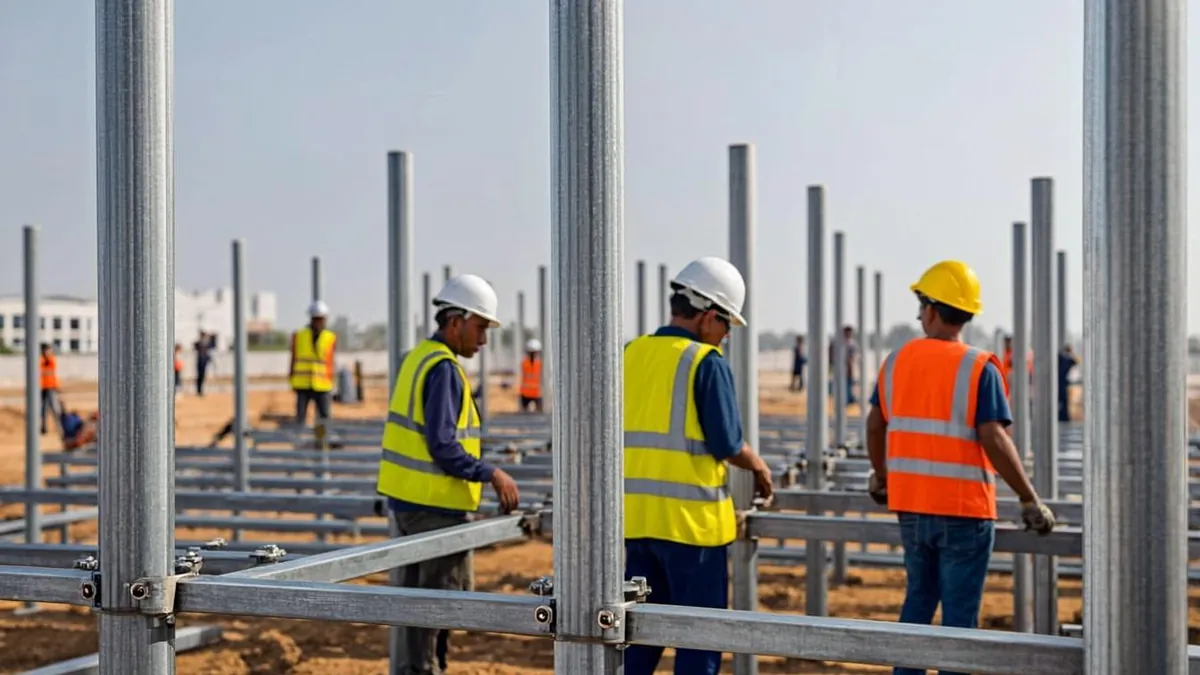
A joint pin — also called a spigot — is the internal connector that joins two scaffold tubes end-to-end, sliding inside the 48.3 mm bore so one standard continues into the next without doubling the diameter. It is the reason scaffold standards come in transportable lengths yet run forty metres up a facade, priced indicatively at AED 3–7 per piece in certified UAE stock and checked at inspection for tightness, damage and the locking pin or bolt that keeps the joint from working apart.
What a Joint Pin Actually Does
Every other connector in the scaffolding yard joins tubes that cross or meet at an angle — the double coupler at 90°, the swivel coupler at whatever angle the brace demands. The joint pin solves a different problem entirely: making two tubes into one continuous member. Also called a spigot, it slides inside the 48.3 mm bore of both tube ends and locks them in line, which is how a scaffold built from six-metre standards reaches the twelfth lift without a single welded or threaded factory joint. Vertical standards are its home ground — the scaffolding parts name list puts it plainly: joint pins extend tubes end-to-end. Tubes and joints make the frame; toe boards make the edge safe — the toe board size and clip standard page details the requirements.
The physics worth understanding before the procurement table: an internal pin carries compression beautifully and tension poorly. Loaded columns stacked above the joint push the pin-loaded connection tighter; anything that tries to pull the joint apart relies on the pin's much smaller withdrawal resistance — which is why designs that need tension continuity at the joint specify external sleeve couplers instead, and why the pin's locking element matters more than its body. Get that one distinction right and most joint-pin misuse on UAE sites disappears.

Joint Pin vs Sleeve Coupler vs Clamp Family
The end-to-end question has two answers in a UAE yard — internal pin or external sleeve — and everything else in the connector family answers different questions entirely. The comparison below uses the same duty language our scaffolding clamps guide publishes.
| Connector | Joins | Load Behaviour | Where It Belongs |
|---|---|---|---|
| Joint pin (spigot, internal) | Tube ends, inside the bore | Compression-strong; needs lock against pull-out | Standard-to-standard extensions on every lift |
| Sleeve coupler (external) | Tube ends, clamped outside | Compression and tension continuity | Joints that must resist pull-out and bending |
| Double coupler | Tubes at 90° | Structural — full duty | Standards to ledgers, principal joints |
| Swivel coupler | Tubes at any angle | Bracing — medium duty | Diagonal and plan bracing |
| Girder / beam clamp | Tube to steel beam | Heavy — designed | Ties to structure, parapets |
The site rule that falls out of the table: pin the columns, sleeve the joints that might be pulled. Standards stacked in pure compression take pins; joints in ledgers, ties or anything suspended take sleeves or couplers rated for the force. The failure inspectors know on sight is a pin-only joint doing tension work — the connection that crept apart one lift cycle at a time because nobody specified the sleeve the drawing assumed.
Sizes, Standards and the Locking Question
Certified joint pins in the UAE market are made for 48.3 mm outer-diameter tube to EN 74-1 / BS 1139 — the same certification the whole connector family carries, which matters for a component that hides inside the tube and shows only its ends. Beyond the certification mark, the buying decision is the locking system: plain friction-fit pins rely on install care and gravity; captive-pin versions add a spring-loaded center pin that springs into the tube's alignment holes; and bolt-through variants take a structural bolt across the joint for the highest security against working apart. Each step up in lock security costs dirhams and saves lifts.
| Check Before Buying | Why It Matters in the UAE |
|---|---|
| EN 74-1 / BS 1139 mark | Unmarked pins fail the audit inside the tube just as fast as outside |
| Locking system matched to duty | Friction fit for pure columns; captive or bolt-through where vibration lives |
| Galvanised finish | Coastal air corrodes hidden surfaces no one inspects |
| Consistent diameter tolerance | Loose pins rattle; over-tight pins never seat |
| Centering flange or stop | Keeps the pin equal in both tubes — the joint's whole alignment |

What Joint Pins Cost in the UAE (2026)
Indicative bulk pricing from the certified-stock market our clamp guide tracks: joint pins run AED 3–7 per piece — the cheapest structural connector in the family, below singles at AED 4–10, doubles at AED 6–14 and swivels at AED 7–16. The price spread inside that band is almost entirely the locking system: plain pins at the bottom, captive-pin and bolt-through versions at the top. Because a facade scaffold consumes pins at every standard extension, the honest budget line is "pins plus the sleeves the tension joints need" — buying pins alone because they are cheap is how yards end up improvising the pull-out resistance they did not buy.
Rental fleets price pins inside the tube-and-fitting day rate like every other small connector, which makes the buy-versus-hire arithmetic a question of loss rate rather than unit price — pins are the most-lost component in the yard after spanners. The scaffolding rental guide covers how UAE yards structure those rates across the component set.
Where Designs Put Pins — and the Jack Connection
The pin's territory on an erection drawing is every vertical continuation: standards rising lift by lift, columns of birdcage scaffolds, and the vertical runs that terminate, at the top of the structure, in the universal jack or base jack that thread into the tube's end the way a pin hides inside it. That family relationship is worth noticing at procurement time — jacks, pins and tubes share the 48.3 mm dimension and the EN 74-1 / BS 1139 certification world, so one certified supplier covers the full vertical load path from sole plate to jack to pin-extended standard.
The design conversation pins appear in most often is splice position: standards staggered so adjacent lifts never splice at the same height, keeping the compression path continuous through any single lift. It is the same thinking our brace scaffolding guide applies to bracing patterns — continuity where the force runs, engineered connection where the geometry changes.

Inspection and Discard Criteria
Joint pins hide inside the tube, which changes how they are inspected rather than whether. The competent person's checks: joint tightness — any visible gap or rattle between tube ends means the pin is not seated or has lost diameter to wear; lock presence — the captive pin or bolt actually installed, not "next visit"; body condition — bends, cracks or corrosion on the visible ends; and splice alignment — tubes continuing straight, because a pin bowed at installation drags the whole column off line. Pins found loose on the ground below a scaffold are a finding about the joint above, not about housekeeping.
The rhythm is the scaffold's own — pre-use checks by the crew, tag-and-inspect after erection and alteration, periodic examination by the competent person — documented with intervals and tagging rules in our scaffolding inspection requirements guide. Yards that quarantine incoming pins against the discard list before they join the fleet, exactly as they do couplers, keep the vertical load path boring. Boring is the goal.
Frequently Asked Questions
What is a joint pin in scaffolding?
An internal connector — also called a spigot — that slides inside the 48.3 mm bore of two scaffold tube ends to join them end-to-end into one continuous member. It is how standards extend lift by lift up a facade while staying transportable at ground level. Certified to EN 74-1 / BS 1139 and priced indicatively at AED 3–7 per piece in UAE bulk stock, it carries compression strongly and relies on its locking pin or bolt against pull-out.
How much do scaffolding joint pins cost in the UAE?
Indicatively AED 3–7 per piece in certified bulk stock in 2026 — the cheapest structural connector in the family, below singles at AED 4–10, doubles at AED 6–14 and swivels at AED 7–16. The spread inside the band is mostly the locking system: plain friction-fit pins at the bottom, captive-pin and bolt-through versions at the top. Budget pins together with the sleeve couplers the tension joints need rather than pins alone.
What is the difference between a joint pin and a sleeve coupler?
Position and load behaviour. A joint pin sits inside the tube bore and is compression-strong but weak against pull-out, so it belongs on stacked columns like standards. A sleeve coupler clamps outside both tube ends and gives the joint tension and bending continuity, so it belongs wherever the joint might be pulled or loaded across. Pin the columns, sleeve the joints that resist tension — the rule that prevents most connection findings.
How do you inspect a joint pin connection?
Check four things: joint tightness with no gap or rattle between tube ends; the locking element actually installed — captive pin seated or bolt through; body condition on the visible ends — bends, cracks, corrosion; and splice alignment, because tubes must continue straight through the joint. A pin that will not seat, a lock that is missing, or a column that runs off-line each reject the connection. Loose pins found below a scaffold are a finding about the joint above.
What size tube does a joint pin fit?
Certified UAE stock is made for 48.3 mm outer-diameter scaffold tube to EN 74-1 / BS 1139 — the same tube as the coupler families and the base and universal jacks, so one certified supplier covers the whole vertical load path. Check the diameter tolerance at intake: pins that rattle in a new tube have lost their fit before their first lift, and pins that need a hammer to seat will not come out at dismantle.