 QUALITY INTL CERTIFICATIONS
Welder Salary in UAE 2026: 6G, TIG, Pipe & Structural Pay
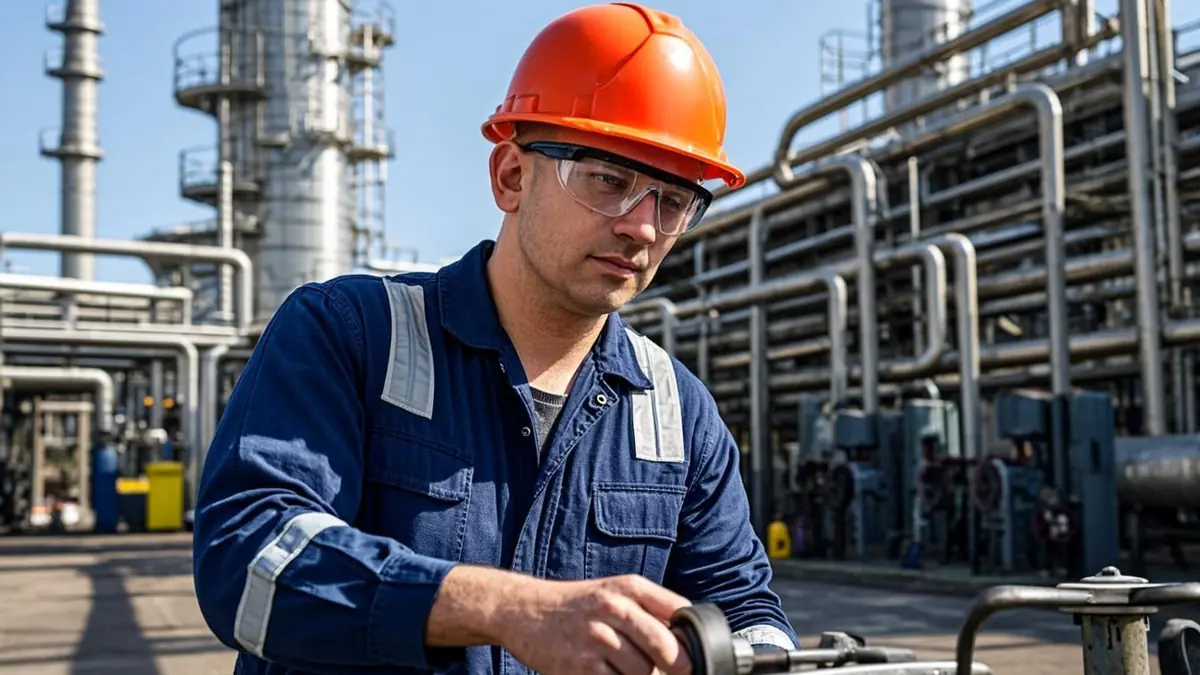
The welder salary in Dubai per month is indicative at AED 1,800–3,000 for structural welders, while 6G pipe TIG welders earn AED 3,000–5,000. Shutdown seasons add a premium on top, making oil and gas turnarounds the highest-paying window. Certification level — especially passing a 6G test — is the single biggest pay lever for welders in the UAE.
Direct answer first: structural welders in the UAE earn an indicative AED 1,800–3,000 per month, TIG fabrication welders AED 2,200–3,600, and 6G pipe TIG welders AED 3,000–5,000 — with shutdown seasons in oil and gas adding premiums on top of any band. The single biggest pay lever is certification: passing a 6G qualification test moves a welder from the structural band into the pipe band in one step, and ASME IX or AWS D1.1 documentation keeps that premium defensible at every mobilisation. Dubai and Abu Dhabi offers sit broadly level; the real swing is sector and rotation, not emirate. The tables below break pay down by qualification, process and site type. Welders moving into inspection start with the 3.1 ticket — our CSWIP 3.1 course fees in Dubai page prices the move.
Monthly welder pay by process, from structural MMA to 6G pipe TIG.
How Welder Pay Is Structured in the UAE
Welder pay in the UAE is quoted as a monthly basic, and two factors decide the band you occupy: your welding process and your sector. Process capability separates the market more than anything else — structural MMA welders and 6G pipe TIG welders are effectively different trades in pay terms, even when both carry the same job title on paper.
The single biggest top-up is shutdown overtime. When plants and refineries enter turnaround, hot work multiplies and welders log long hours, with overtime pushing monthly earnings well above basic pay. Outside shutdown windows, monthly income is steadier and sits closer to the quoted band, which is why welders compare offers on both basic and expected overtime.
Sector decides the opportunities. Oil and gas, fabrication and maintenance each run different demand cycles: oil and gas concentrates pay into shutdown seasons, fabrication offers steady yard work, and maintenance spreads ongoing repair jobs across operating facilities. Understanding which sector a vacancy belongs to tells you most of what you need to know about the money. The same advert can hide very different monthly outcomes depending on which of the three it belongs to.
Welder Salary by Process and Position
The spread between welding processes is wide, and TIG welder salary in the UAE sits in the middle of it. Structural welders — MMA and arc processes on steel frameworks — earn an indicative AED 1,800–3,000 per month across UAE fabrication and construction. TIG welders in general fabrication occupy the band between structural and pipe rates. At the top, 6G pipe TIG welders earn an indicative AED 3,000–5,000, the qualification employers reach for on pressure pipework in oil and gas. All figures are indicative per current market data, and shutdown premiums push the top band higher still. Employers verify the claimed process before hiring, because pay bands follow demonstrated positions rather than self-declared skill. Where a welder sits on the day depends on the ticket in hand and the sector doing the hiring. Welders stepping into inspection add a verification chore to the pay rise — the CSWIP verification and renewal page explains the process.
| Process and position | Indicative monthly pay (AED) | Typical sector |
|---|---|---|
| Structural welder (MMA/arc) | 1,800–3,000 | Construction, fabrication yards |
| TIG welder (general fabrication) | 2,200–3,600 | Sheet, stainless and pipework fabrication |
| 6G pipe TIG welder | 3,000–5,000 | Oil and gas, petrochemical |
| 6G welder during shutdown | Top of band plus premium | Turnaround and outage work |
The 6G Test: Why It Commands the Top Pay
The 6G test is the gate between mid-band and top-band welding pay. Welding a pipe joint in the 6G position is the toughest of the common pipe test routes, which is exactly why employers pay for it: a welder who passes has demonstrated control across every orientation in a single joint. Qualification typically runs under ASME IX, the welding qualification framework that oil and gas employers recognise, so the certificate travels between projects rather than dying with one employer.
The realities of the test are blunt. It is demanding, retests are common, and employers verify certificates before trusting a welder on pressure pipework. Candidates who treat preparation seriously — practice joints, position discipline, honest self-assessment — pass at a far better rate than those who book early and hope.
Once passed, a 6G ticket effectively re-prices the welder: 6G welder salary in Dubai and across the UAE moves into the AED 3,000–5,000 indicative band, with shutdown windows adding premium on top. That is why experienced welders describe the 6G test as an investment rather than an exam — the pay difference compounds over a career. Trade pay comparisons across the site trades are tracked live — see the forklift operator salary UAE page for the warehouse side.
Oil & Gas vs Fabrication vs Maintenance
Three sectors absorb most UAE welding employment, and they pay differently. Oil and gas — concentrated in Abu Dhabi — runs pipe welding, pressure work and shutdown turnarounds, and pays the highest bands, especially for 6G-qualified welders. Fabrication yards across the Emirates offer steady structural and TIG work at the mid and lower bands, with steadier hours and less travel between sites. Maintenance welding sits between the two: ongoing repair work across operating facilities, less cyclical than shutdowns but without the premium spikes. Maintenance roles suit welders who prefer fixed facilities over project-to-project movement.
For welders choosing between them, the honest trade-off is stability against peak earnings. Fabrication and maintenance deliver predictable monthly income; oil and gas delivers the highest ceiling, concentrated into shutdown seasons. Gulf-wide, the same split repeats in Saudi Arabia and Qatar, so welders who build 6G capability can move between markets as turnarounds rotate. Fabrication yard employment, by contrast, rewards consistency and multi-process competence rather than a single premium ticket.
Many welders structure their year around that rhythm — steady work between turnarounds, then shutdown assignments when demand, hours and overtime peak.
From Welder to Welding Inspector: The CSWIP Upgrade
The recognised career upgrade from welding is inspection. Welding inspectors examine and accept welds rather than lay them, working on the quality side of fabrication and construction. The CSWIP qualification is the credential linked with this step, and welders with deep process experience — especially 6G pipe work — are natural candidates for it.
The economics make the case. Welder pay tops out in the AED 3,000–5,000 indicative band plus shutdown premium, while inspector roles carry a separate, higher salary band. The move also changes the work itself: less time under the welding mask, more time reviewing joints, procedures and compliance with the welding plan.
The transition suits welders whose judgment is already trusted on site — the person the foreman asks to check a difficult joint. Training providers in the UAE, including QIC (Quality International Certifications), a UAE inspection and training company since 1998, support this progression. The bridge is short: inspectors who once welded read joints with a welder's eye, which site teams notice quickly. For welders planning five years ahead, the sequence is simple: master the process, pass 6G, log the hours, then cross into inspection.
Checklist: Moving Up the Welding Pay Bands
- Master MMA fundamentals before specialising in TIG or pipe work.
- Treat the 6G test as a planned investment — practice before you sit it.
- Keep welding certificates current and verifiable under ASME IX.
- Register with shutdown contractors ahead of turnaround season.
- Compare the total package including overtime, not basic pay alone.
- Log process hours by position and material as proof of experience.
- Match your target sector — oil and gas, fabrication or maintenance — to your certification plan.
- Plan the CSWIP inspection route once your process experience is deep.
Welder Salary by Qualification (UAE 2026)
Employers in the UAE price welders by what their paper proves, not by years alone. The qualification table below consolidates the bands this site tracks across its welding pages — read the Dubai column as the UAE-wide published band (emirate offers sit broadly level), and treat offshore figures as rotation-dependent [VERIFY current offshore rates with contractors]:
| Qualification / process | Indicative Dubai AED/month | Abu Dhabi | Offshore / shutdown | Experience needed |
|---|---|---|---|---|
| 3G structural welder (MMA/arc) | AED 1,800–3,000 | Broadly level with Dubai | Shutdown premium on top of band | 0–2 years, position-tested |
| TIG welder (general fabrication) | AED 2,200–3,600 | Broadly level with Dubai | Premium on process-critical work | 2+ years sheet/stainless/pipework |
| 6G pipe TIG welder | AED 3,000–5,000 | Broadly level; oil & gas hub | Top of band plus rotation premium | 3+ years plus passed 6G test |
| ASME IX qualified (WQT on record) | Top of process band | Broadly level | Preferred for pressure-boundary work | Employer-sponsored WQT |
| AWS D1.1 certified (structural) | Top of structural band | Broadly level | Structural shutdowns favour it | D1.1 continuity rule maintained |
| Offshore / rig welder | Rotation-based [VERIFY] | Rotation-based [VERIFY] | Highest all-in earnings | 6G plus offshore survival certs |
How to read the table honestly: the structural and 6G bands are the market anchors every UAE employer recognises; the ASME IX and AWS D1.1 rows are multipliers on top of your process band rather than separate salaries, because they document that your weld was tested and found sound under a specific procedure. Offshore assignments convert any band into day-rate or rotation earnings that out-earn monthly basics — but they demand the full offshore cert stack and a 6G card first, which our 6G qualification test guide prepares candidates for.
Salary by Process — TIG, MIG, SMAW, FCAW
Process choice sets the floor of a welder's band before certification moves the ceiling. SMAW (stick/MMA) remains the entry process of structural sites: fast to learn, cheap to run, and priced accordingly at the bottom band. MIG/GMAW adds speed on fabrication-shop work — yards pay for deposition rate, so MIG welders in precast and steel-fabrication shops sit mid-band. FCAW dominates structural site work where position and wind make MIG impractical, and carries the shutdown premium on thick plate. TIG/GTAW is the precision process: stainless, duplex and thin-wall pipework command the highest process premium because rework is unforgiving, and TIG competence is the gateway drug to 6G pipe money. Stack a second process on a tested first one and employers stop pricing you as a single-process hand — the combination premium is real and it compounds with every shutdown season survived.
Structural versus pipe versus offshore is the second axis. Structural welders work civil packages and steel erection; pipe welders work process plants where every weld is traceable to a WPS and subject to radiography; offshore welders live in the harshest of the three worlds and are paid for it. The traceability demand is why pipe work pays more: a rejected radiograph means cutting the weld out and re-doing it at your cost in reputation. The quality-system view of that traceability chain — WPS, PQR, WQT and how they lock together — is mapped in our WPS PQR WQT guide.
Which Certification Raises Pay Most
Ranked by pay impact per dirham spent, the order is consistent across UAE market cycles. First, the 6G pipe test: one passed test repositions a welder from structural money into pipe money immediately, which is why we proctor them weekly. Second, ASME IX welder qualification (WQT): it documents the ranges (position, diameter, thickness, backing) a welder is proven for — and each documented range widens the work a contractor may legally assign. Third, AWS D1.1 qualification: the structural code counterpart, checked at every US-influenced project mobilisation, and kept alive only by the six-month continuity rule our AWS D1.1 qualification guide explains. Fourth, process add-ons (a TIG ticket on an SMAW base). The long-game move is different: experienced welders who add inspection credentials step into a different salary universe entirely — the CSWIP route and its UAE pay bands are tabulated in our welding inspector salary guide.
Dubai vs Abu Dhabi vs Offshore — Where the Money Actually Differs
Emirate choice matters less than contract type. Dubai offers breadth — construction, marine, events infrastructure, maintenance — and steady year-round demand. Abu Dhabi concentrates oil, gas and ADNOC-family industrial work: fewer employers, heavier prequalification, but the shutdown calendar (turnarounds that run weeks of extended shifts) generates the premium windows welders plan their year around. Offshore rotations sit above both on earnings and above both on requirements: 6G is effectively mandatory, offshore survival and medical certificates are entry tickets, and the rotation pattern (typically 28/28 or similar [VERIFY current rotation terms]) is the price of the day-rate. A practical career sequence we see repeating across our candidates: build process skill on Dubai structural work, take the 6G test, enter Abu Dhabi shutdown cycles for two or three seasons, then choose between offshore rotations or the inspection ladder.
How to Move Up a Pay Band
The bands above are not cosmetic — they are what HR systems and subcontractor rates actually reference. Moving up is procedural, not political. Step one: get position-tested formally (3G, then 6G) so the grade exists on paper — verbal claims of "I can weld pipe" price at zero. Step two: keep continuity documented, because both ASME IX and AWS D1.1 qualifications lapse when the process goes unused — six months without documented process use resets the claim. Step three: collect the paperwork employers verify at mobilisation (WQT certificates, medical, safety inductions) so you can be deployed the day a shutdown starts — deployability itself carries a premium. Step four: time your moves to the shutdown calendar, since rates harden when rotations are short-staffed. Each step is inspectable, which is why they work: the welding trade is one of the last where a tested skill converts to a documented pay grade within weeks.
Frequently Asked Questions
What is the welder salary in Dubai per month?
Indicatively, structural welders in Dubai earn AED 1,800–3,000 per month, while 6G pipe TIG welders earn AED 3,000–5,000. Overtime during shutdown seasons pushes earnings higher. Exact figures vary by employer, project and process, so treat all ranges as indicative per current market data. Process choice moves the number more than employer choice.
How much does a 6G welder earn in UAE?
6G pipe TIG welders earn an indicative AED 3,000–5,000 per month, the top of the welder band. During shutdown turnarounds, overtime premiums push monthly earnings above that band. The 6G test under ASME IX is demanding, which is exactly why the qualification commands premium pay across the UAE. Shutdown overtime then lifts the strongest months higher.
Which welding process pays most in Abu Dhabi?
6G pipe TIG welding pays the most, at an indicative AED 3,000–5,000 per month, and Abu Dhabi's oil and gas sector concentrates that work. Structural MMA welding sits at the lower band of AED 1,800–3,000, with general TIG fabrication between the two. All figures remain indicative. Sector demand concentrates the premium work in Abu Dhabi.
Do welders earn extra during shutdowns?
Yes. Shutdown overtime is the biggest single top-up in UAE welding pay. When plants enter turnaround, hot work multiplies and welders log long hours, with overtime pushing monthly earnings well above the basic band. The premium is strongest for 6G-qualified pipe welders. Scheduling work around the turnaround calendar is how welders capture it.
How do I become a welding inspector from welder?
Build deep process experience first — 6G pipe work counts strongly — then pursue the CSWIP qualification, the credential linked to welding inspection roles. Inspectors work on the quality side, examining welds rather than laying them, and earn in a separate, higher salary band than welders. Process depth is what makes the transition credible to employers.
What is a 6G welder's salary in Dubai?
An indicative AED 3,000–5,000 per month basic for 6G pipe TIG welders, with oil-and-gas shutdown seasons adding premiums on top of the band. The 6G qualification is the single biggest pay lever in UAE welding because it tests pipe fixed at 45 degrees — covering flat, vertical and overhead transitions in one joint — and qualifies the widest production position range for the process.
How much does a welder earn in the UAE per month?
By band: structural welders around AED 1,800–3,000, TIG fabrication welders AED 2,200–3,600, and 6G pipe welders AED 3,000–5,000, with offshore and shutdown rotations earning above monthly basics. Dubai and Abu Dhabi offers sit broadly level — the meaningful swing is sector, process and rotation, not emirate.
Does AWS D1.1 certification increase welder salary?
It protects and tops the structural band rather than creating a new one. AWS D1.1 qualification proves a welder deposited sound welds under a specific Welding Procedure Specification, and it stays valid only while the process is used continuously — the six-month continuity rule UAE project quality teams check at every mobilisation. D1.1-certified structural welders command the top of the AED 1,800–3,000 band and are first-picked for code-governed structural shutdowns.
Do offshore welders earn more in the UAE?
Yes — offshore assignments convert monthly bands into day-rate or rotation earnings that out-earn onshore basics, but the entry price is the full stack: a 6G card, offshore survival and medical certificates, and rotation terms (commonly 28/28 or similar [VERIFY with current contractors]). Offshore welders are paid for environment plus precision: every weld is traceable and radiography-rejected welds are cut out and re-done.
What is the highest-paid welding job in the UAE?
Offshore and rig welders on rotation earn the highest all-in figures, followed by 6G pipe TIG welders inside shutdown windows. The highest ceiling overall belongs to welders who cross into inspection: CSWIP-certified welding inspectors earn AED 6,000–8,000 at mid-grade and AED 10,000–14,000+ at senior grade — a different salary universe that experienced welders reach through the CSWIP route.